A practical guide to removing limescale safely from taps, kettles, showerheads and toilets, with prevention tips for hard-water homes.
The safest way to remove limescale is to soften the mineral build-up with the right descaling method, then clean gently without scratching chrome, glass, seals or enamel. In hard-water areas of London and Kent, limescale returns quickly, so prevention matters as much as removal. A careful deep clean should deal with taps, kettles, showerheads, toilets and glass without relying on harsh scrubbing.
What is limescale, and why does it build up so quickly?
Limescale is a chalky mineral deposit left behind when hard water evaporates. It is most visible around taps, shower screens, kettle elements, plugholes, toilets and showerheads because these areas are repeatedly exposed to water. In many London and Kent homes, hard water means limescale can appear even when the room is cleaned regularly.
The deposit is usually pale, rough and stubborn. Around taps it may form a crust at the base. In kettles it appears as white flakes or a hard coating inside. On shower glass it can create cloudy patches that do not lift with ordinary cleaning.
The professional mistake we most often see is treating limescale like ordinary dirt. It is not dirt. It is mineral build-up, so it needs time to soften before it can be removed safely.
- Light limescale often responds to a gentle descaling approach.
- Heavy limescale may need repeated treatment.
- Old staining on glass or metal can be harder to improve.
- Scratching usually happens when people use too much force too soon.
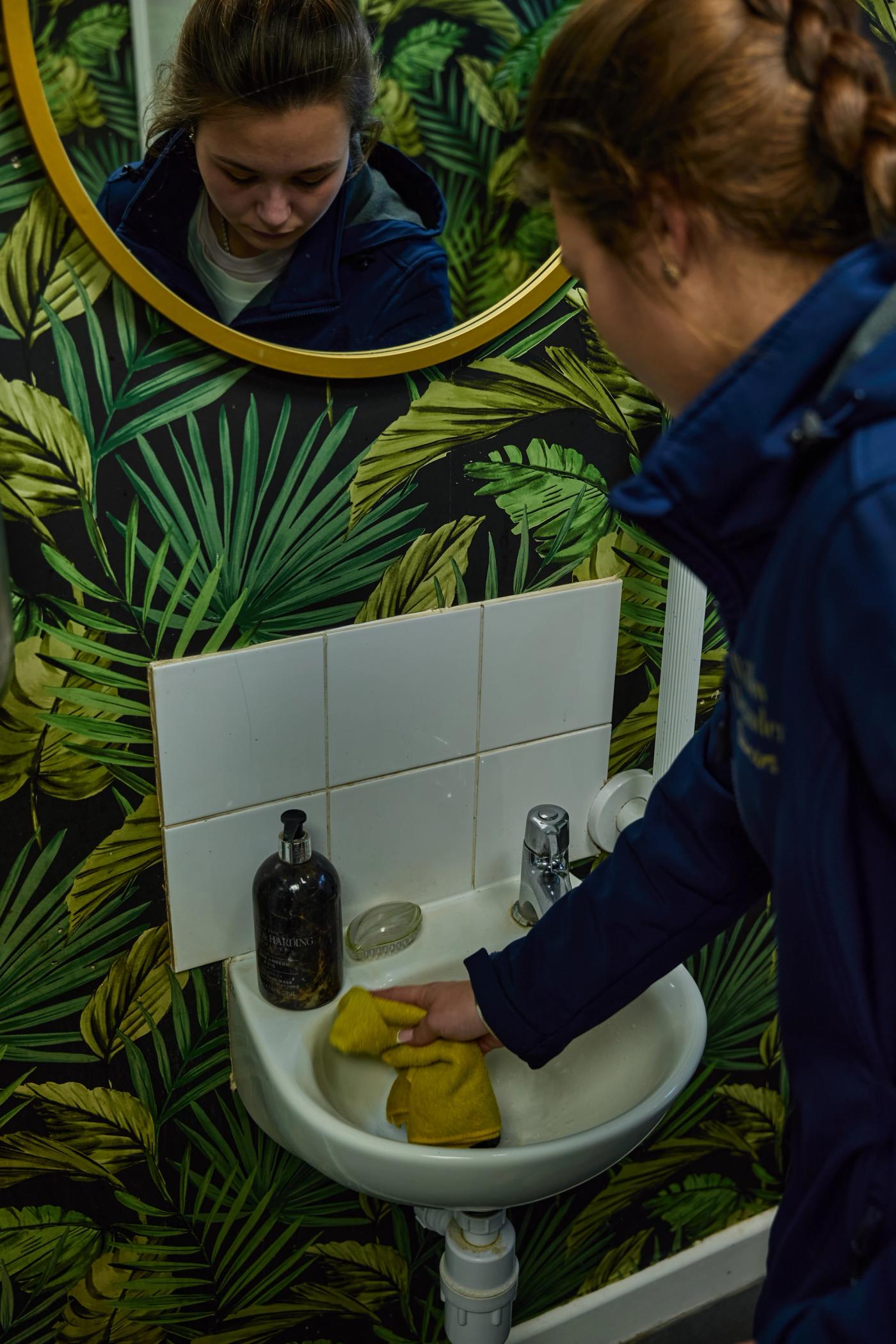
How do you remove limescale from taps safely?
To remove limescale from taps safely, soften the deposit first, then wipe rather than scrape. The surface around taps can include chrome, stainless steel, sealant, stone, ceramic and rubber washers, so one aggressive product used everywhere can cause damage. A professional clean treats the fitting and surrounding material separately.
For chrome taps, a mild descaling approach is usually best. The limescale around the base often needs contact time, but not harsh abrasion. Once softened, the residue can be lifted with a non-scratch cloth or suitable brush around the joint.
Take care with natural stone surrounds, marble, limestone or specialist finishes. Acidic products can mark some surfaces. The safest method depends on what the tap is sitting on, not just the tap itself.
What is the common tap-cleaning mistake?
The common mistake is wrapping taps in undiluted vinegar and leaving it for too long. Vinegar is often recommended online, but undiluted acid can affect rubber seals, plated finishes and nearby stone. It may also dull some surfaces if used carelessly.
A careful cleaner uses controlled product, limited contact time and proper rinsing. The goal is to dissolve the mineral deposit without harming the material beneath it.
How do you descale a kettle properly?
A kettle should be descaled by using a suitable kettle-safe descaler or a careful natural method, then rinsing thoroughly before use. Limescale inside a kettle affects the look of the water and can leave flakes in drinks. It is also one of the most visible signs of hard water in the home.
Before descaling, check the kettle instructions. Some kettles have coated elements, filters or materials that need particular care. Remove and rinse the filter if suitable. After descaling, boil and discard fresh water as needed until the kettle is completely clean.
A kettle that scales quickly is not a sign that the kitchen is dirty. It is usually a sign that the local water is hard. In homes where tea, coffee and cooking water are used constantly, kettle descaling may need to become part of the regular cleaning rhythm.
How do you clean limescale from showerheads?
To remove limescale from a showerhead, the mineral deposits inside and around the nozzles need to be softened and rinsed away. A blocked showerhead can spray unevenly, look dull and hold chalky residue around each outlet. Cleaning the visible face is useful, but the nozzles often need more attention.
If the showerhead can be removed, it may be cleaned more thoroughly. If it cannot, the cleaner should work carefully in place, avoiding strain on fittings or hoses. After descaling, the shower should be run to flush away loosened residue.
Again, contact time matters. Scrubbing the face of a showerhead with an abrasive pad may mark the finish without properly clearing the nozzles. A more patient method gives a cleaner result.
How often should showerheads be descaled?
In hard-water homes, showerheads may need descaling regularly, especially in bathrooms used every day. If the spray pattern becomes uneven, if water jets sideways, or if the face looks chalky even after cleaning, it is time.
Regular Cleaning can help prevent heavy build-up by dealing with bathroom fittings before limescale becomes stubborn. Deep Cleaning is more suitable when deposits have already hardened.
How do you remove limescale from toilets?
To remove limescale from toilets, focus on the waterline, flush rim and any mineral staining below the water level. Toilet limescale is often more stubborn because the surface stays wet and mineral deposits build in layers. A quick brush may clean the bowl but leave the chalky staining behind.
Professional cleaners approach toilets with suitable products, contact time and careful brushing. The aim is to remove mineral build-up without damaging ceramic glaze or surrounding fittings. Repeated gentle treatment is often better than one aggressive attempt.
If limescale returns quickly, check whether the toilet is constantly running or trickling. A small flow of water can create persistent mineral marks and may need maintenance beyond cleaning.
How can you prevent limescale coming back?
You prevent limescale by reducing standing water, drying key surfaces and keeping hard-water areas on a regular cleaning rhythm. In London and Kent, hard water means some limescale will return, but it does not need to become heavy or unsightly.
After showers, clear water from glass and fittings where practical. Wipe taps dry when you notice water sitting around the base. Keep kettle descaling in the household routine. Clean toilet bowls before mineral rings harden.
A regular cleaner helps because they catch early build-up. The difference between a light weekly wipe and a heavy seasonal limescale removal is usually time.
- Dry chrome where possible.
- Keep shower glass clear of standing droplets.
- Descale kettles before flakes appear.
- Do not let toilet waterline marks sit for months.
- Check dripping taps, running toilets and leaking showerheads.
Are natural limescale removers enough?
Natural descaling methods can help with light limescale, but they are not always enough for heavy build-up or delicate materials. The word natural does not automatically mean safe for every surface. Vinegar and lemon juice are acidic, and acids can mark stone, affect seals or dull finishes if used carelessly.
Professional cleaning is not about using the strongest product. It is about choosing the right product for the material, the level of limescale and the surrounding surfaces. Low-tox and plant-based products can work well when used with judgement, contact time and the correct method.
For homes with children and pets, product choice matters. So does rinsing properly and leaving surfaces clean, fresh and safe for ordinary use.
When should you book a professional deep clean?
Book a professional deep clean when limescale has become hard, widespread or difficult to remove without force. This is especially useful in bathrooms with shower glass, chrome fittings, toilets, tiles, grout and multiple water points. It is also sensible before guests arrive, after a busy season, or when a home has not had detailed bathroom attention for some time.
Willow Alexander Cleaners arrives with the products and equipment needed, so clients do not need to provide anything. If you prefer your own products to be used, simply say so. The teams are vetted, DBS-checked, reference-verified and trained to the Willow Alexander standard before working in a client’s home.
Limescale is ordinary in hard-water areas, but heavy build-up should not be allowed to define a bathroom or kitchen. With careful treatment and a regular routine, taps shine again, kettles work more cleanly, showerheads spray properly and the home feels better cared for.
Common questions
What is the best way to remove limescale?
The best way is to soften the mineral build-up first, then remove it gently with a non-scratch method suited to the surface. Taps, kettles, toilets and showerheads each need slightly different care.
Can vinegar remove limescale?
Vinegar can help with some light limescale, but it should be used carefully. Undiluted vinegar can damage rubber seals, some plated finishes and natural stone, so it is not suitable for every surface.
Why does limescale come back so quickly in London and Kent?
Many parts of London and Kent have hard water, which leaves mineral deposits when water dries. Regular cleaning and drying key areas helps stop light deposits becoming heavy build-up.
How do I remove limescale from a showerhead?
The showerhead needs contact time with a suitable descaling method, followed by thorough rinsing. If it can be removed safely, cleaning is often easier, but fixed showerheads can also be treated carefully in place.
Can limescale permanently damage glass or chrome?
Long-standing mineral deposits can become difficult to remove and may leave marks on some surfaces. Early treatment gives the best chance of restoring a clear finish.
Is limescale removal included in a deep clean?
A Deep Cleaning service will usually focus on build-up in bathrooms and kitchens, including limescale where suitable. The exact scope depends on the condition of the home and the time booked.