A practical guide to deep cleaning a kitchen, from cupboards and appliances to sinks, floors, touchpoints and the details that change the room.
Knowing how to deep clean a kitchen is useful because the kitchen carries more daily work than almost any other room. It gathers grease, crumbs, steam, fingerprints, limescale, food residue and floor marks. A quick wipe may make it look presentable, but a deep clean restores the details: cupboard fronts, handles, appliance edges, sink fittings, splashbacks, bins, floors and the quiet corners where residue collects.
How to deep clean a kitchen in the right order
A kitchen deep clean should follow a sensible order. Start by clearing surfaces, removing loose items and emptying areas that need attention. Work from high to low, from dry dust and crumbs to damp cleaning, and from cleaner areas towards dirtier ones. Finish with floors, because everything else will fall towards them.
Begin with shelves, extractor exterior areas, cupboard tops where accessible, light switches, door frames and visible ledges. Move to cupboards, worktops, appliances, sink, bins and floors. Avoid rushing straight to mopping. A kitchen floor is the final stage, not the first.
A deep clean is not only about effort. It is about sequence. The right order prevents you from cleaning the same surface twice.
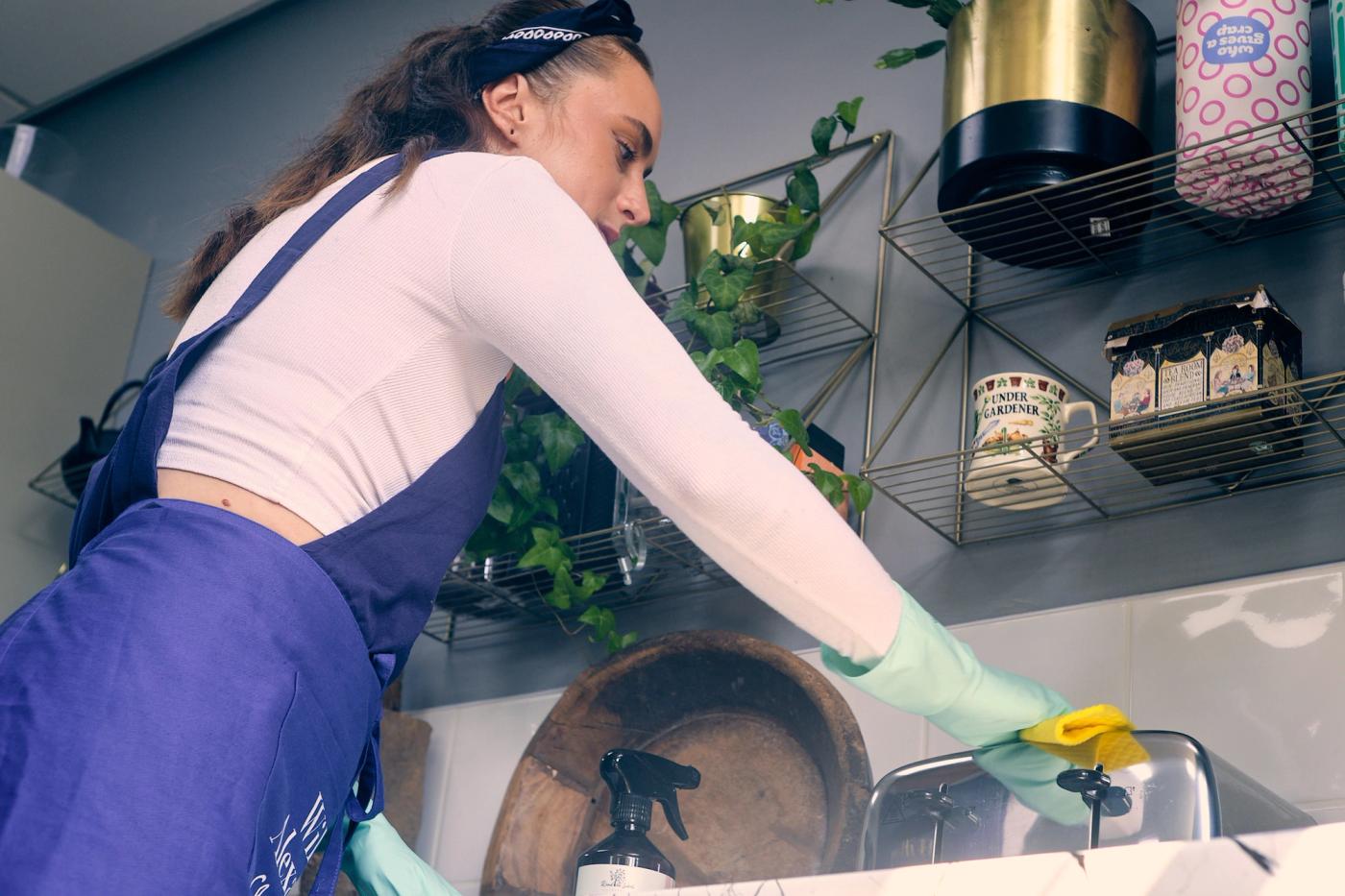
Clear the worktops and sort the visible clutter
Before cleaning begins, remove everything that does not need to be on the worktop. Small appliances, jars, letters, chargers and decorative items all gather dust and grease around their bases. Lift them, clean beneath them and decide what should return.
This step changes the feel of the room immediately. A kitchen with clear surfaces is easier to clean and easier to use. It also reveals marks that were hidden by everyday objects.
Wipe small appliance exteriors where suitable, including kettles, toasters, coffee machines and mixers. Crumbs often collect beneath them, while steam and fingerprints mark the surfaces around them.
Cupboards, handles and splashbacks
Cupboard fronts often hold a fine layer of grease and fingerprints, especially near the hob, bin and dishwasher. Handles gather constant touch marks. Splashbacks collect cooking residue. A deep clean should address all three.
Work methodically from one side of the kitchen to the other. Pay attention to edges, lower cupboards and corners. These areas are easily missed because they sit outside the main line of sight.
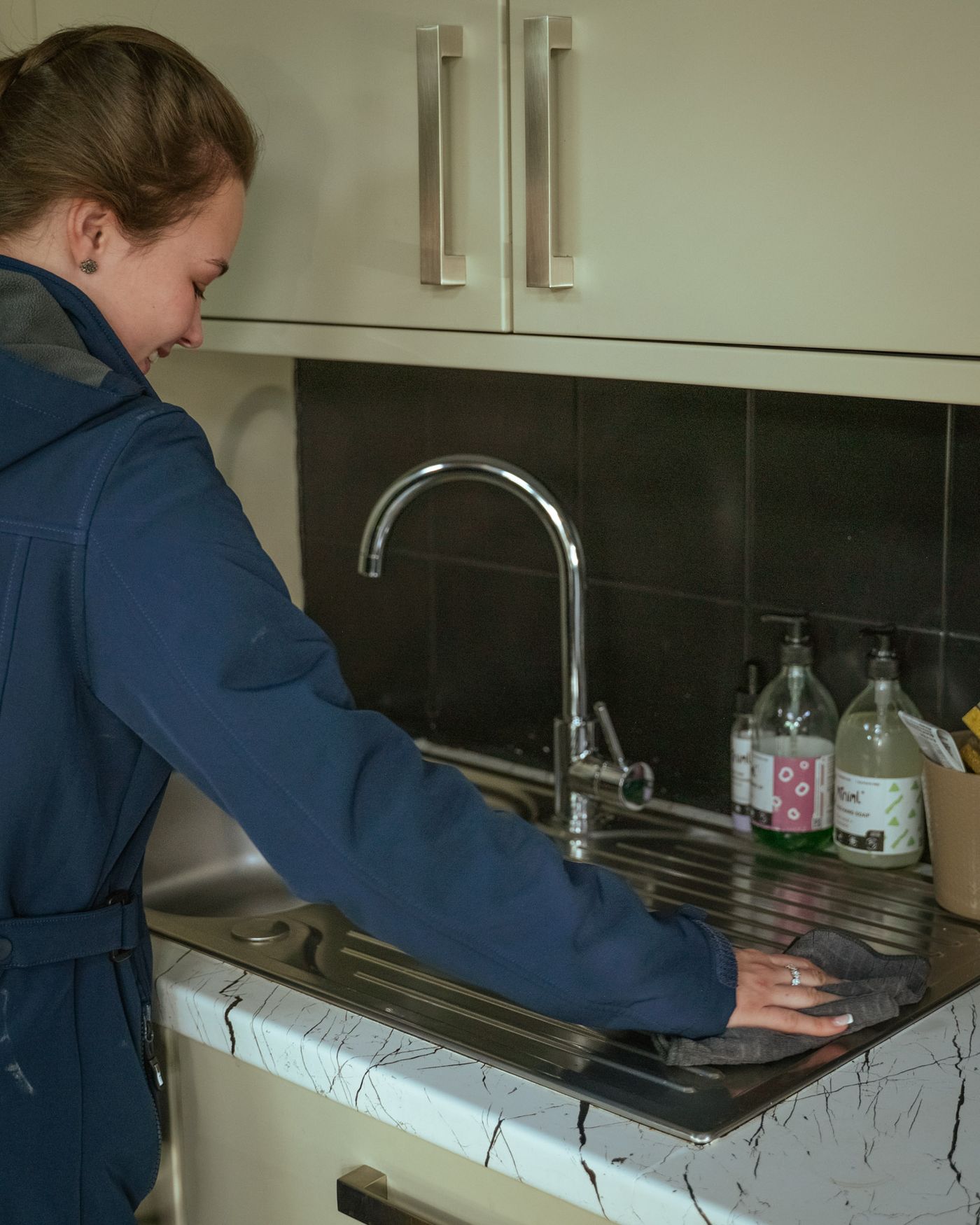
Clean the sink, taps and draining area
The sink area is central to kitchen hygiene and presentation. Limescale, water marks, food residue and soap build-up can make even a tidy kitchen feel dull. Clean the basin, taps, plug area, draining board and surrounding worktop. Pay close attention to the base of taps, where limescale and grime often gather.
If there is a waste disposal or removable sink fittings, clean what is safely accessible. Replace sponges, cloths or brushes that have become tired. Wipe the area behind the tap, which is often missed during daily cleaning.
A polished sink has an immediate visual effect. It catches the light and makes the kitchen feel fresher.
Appliances: where residue hides
Appliances make the kitchen work, but they also hide a great deal of residue. Clean the exterior of the fridge, freezer, dishwasher, oven, microwave and extractor where included in the scope. Handles and control panels need particular attention because they are touched often.
Inside the fridge, remove old food, wipe shelves, clean drawers and pay attention to seals. Allow items to return only once the shelves are dry. For freezers, defrosting may need to be planned separately.
The oven and hob often require more time than expected. Grease, burnt residue and crumbs can build around edges, knobs, racks and glass. If the oven interior is included, allow enough time for it to be cleaned properly.
Bins and recycling areas
Bins are often forgotten because they are functional rather than decorative. Yet bin areas can hold odour, spills and sticky marks. Empty bins, clean the exterior and interior where appropriate, and wipe the floor or cupboard around them.
Recycling areas also need attention, especially where bottles, tins or food packaging have leaked. A deep clean should leave these practical zones fresh, not merely hidden.
Floors, skirting boards and the lower edges
Kitchen floors take daily punishment. Crumbs, cooking splashes, pet bowls, outdoor shoes and chair legs all leave marks. Vacuum thoroughly first, including edges, corners and beneath movable furniture. Then mop according to the floor type.
Skirting boards and lower cupboard plinths are essential. They collect dust and splashes but are often missed in everyday cleaning. Chair legs, table bases and the floor around bins or pet bowls may need extra care.
A clean kitchen floor changes how the whole room feels. It is the finishing note.
What to do inside cupboards and drawers
Inside cupboards and drawers, crumbs and dust gather quietly. A full kitchen deep clean may include emptying selected cupboards, wiping shelves and returning items in good order. This is particularly useful for dry food cupboards, pan drawers, cutlery drawers and under-sink storage.
Do not try to empty every cupboard at once unless there is enough time. Work in sections. Discard expired food, wipe containers that have become sticky, and clean shelf edges before replacing items.
Under-sink cupboards need special care because they often hold cleaning products, cloths, bags and pipework. Remove items, wipe the base and check for spills.
How often should you deep clean a kitchen?
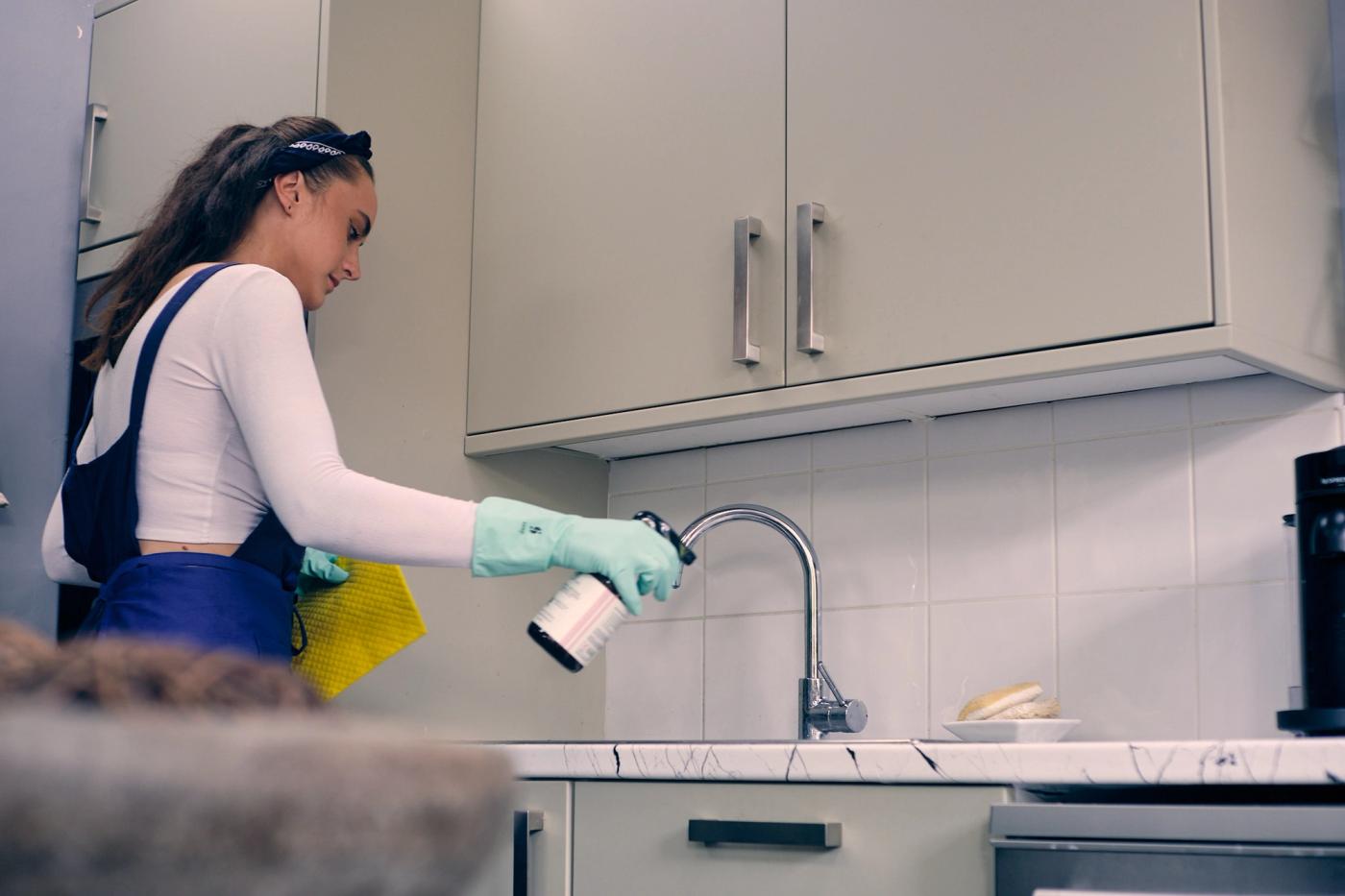
A heavily used kitchen may benefit from a deep clean every few months. A lighter household may only need one seasonally. Regular weekly or fortnightly cleaning reduces how often a full deep clean is needed, because grease and residue are not allowed to settle for long.
Spring is a natural time for a kitchen deep clean. So is the period before hosting, after guests, before a baby arrives, after building work, or when moving into a new home.
The best guide is the detail. If handles feel sticky, cupboard fronts look dull, the sink has lost its shine or the floor edges are marked, it is time.
Why professional kitchen cleaning helps
A professional team brings method, products, equipment and fresh eyes. Willow Alexander cleaners arrive with what is needed, so clients do not have to provide anything. If you prefer your own products, you can simply say so.
The products used are low-tox and plant-based, kind to families and pets, with less single-use waste. Teams are fully insured and vetted, with every cleaner DBS-checked, reference-verified and trained to the Willow Alexander standard.
For a room as important as the kitchen, that level of care gives reassurance as well as a better finish.
A cleaner kitchen changes the way the home feels
To deep clean a kitchen is to restore the room that supports daily life. Clear surfaces, polished taps, clean cupboard fronts, fresh appliances and carefully finished floors all contribute to a calmer space. Whether part of a spring clean or booked as a one-off reset, a kitchen deep clean helps the whole home feel more ordered, more comfortable and easier to maintain.
Common questions
How do you deep clean a kitchen properly?
Clear surfaces first, then clean from high to low. Work through cupboards, appliances, sink, taps, worktops, bins, skirting boards and floors in a logical order.
How often should a kitchen be deep cleaned?
Busy kitchens may need deep cleaning every few months. Lighter households may only need a seasonal deep clean, especially if regular cleaning is already in place.
What areas are most often missed in a kitchen clean?
Common missed areas include cupboard handles, plinths, extractor areas, fridge seals, bin cupboards, splashback edges, skirting boards and the floor beneath movable items.
Can I book a one-off kitchen deep clean?
Yes. Willow Alexander offers one-off cleans with no subscription and no commitment.